



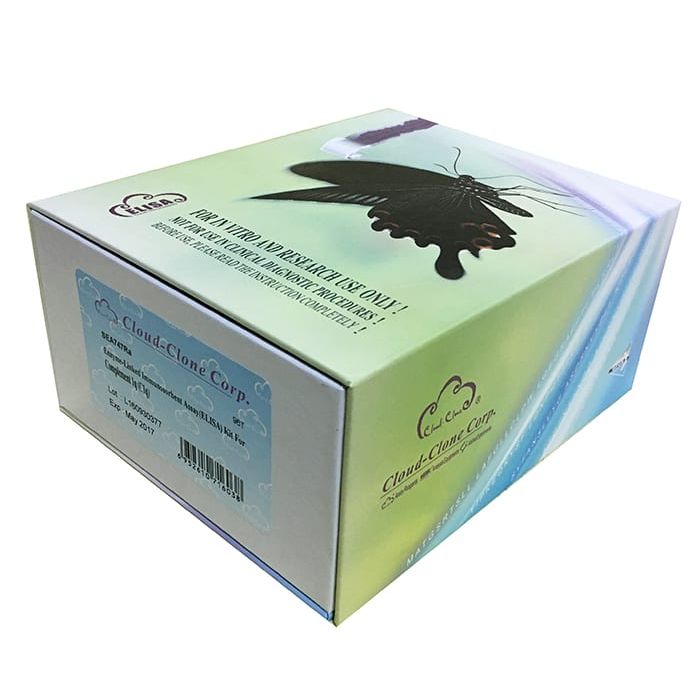
| Product Name | Cort ELISA kit (General species) |
|---|---|
| Description | This assay has high sensitivity and excellent specificity for detection of Corticosterone (Cort). No significant cross-reactivity or interference between Corticosterone (Cort) and analogues was observed. |
| Synonyms | Corticosrone |
| Method | Competitive |
| Detection Range | 6.17-500ng/mL |
| Sensitivity | 2.60ng/mL |
| Target | Cort |
| Specificity | This assay has high sensitivity and excellent specificity for detection of Corticosterone (Cort). No significant cross-reactivity or interference between Corticosterone (Cort) and analogues was observed. |
| Sample Types | Serum, Plasma, Urine And Other Biological Fluids |
| Reconstitution | 1.Prepare all reagents, samples and standards; 2.Add 50uL standard or sample to each well. And then add 50uL prepared Detection Reagent A immediately. Shake and mix.Incubate 1 hour at 37℃; 3.Aspirate and wash 3 times; 4.Add 100uL prepared Detection Reagent B.Incubate 30 minutes at 37℃; 5.Aspirate and wash 5 times; 6.Add 90uL Substrate Solution.Incubate 10-20 minutes at 37℃; 7.Add 50uL Stop Solution.Read at 450 nm immediately. |
| Storage | 4°C for 1 month/ -20°C for long-term(within shelf life) |
| Notes | Colormetric |
| References | Intracerebroventricular injection of leukotriene B4 attenuates antigen-induced asthmatic response via BLT1 receptor stimulating HPA-axis in sensitized rats.;Effects of Gypenosides on Acute Stress in Mice;Role of adrenomedullin in the cerebrospinal fluid-contacting nucleus in the modulation of immobilization stress;Sick Sinus Syndrome May Attribute to the Decrease of ?±-klotho Protein in Mice;Organ-Specific Activation of the Gastric Branch of the Efferent Vagus Nerve by Ghrelin in Urethane-Anesthetized Rats;Regulation of corticosterone secretion is modified by PFOS exposure at different levels of the hypothalamic–pituitary–adrenal axis in adult male rats;Restraint stress alters immune parameters and induces oxidative stress in the mouse uterus during embryo implantation;Diabetes alters the blood glucose response to ketamine in streptozotocin-diabetic rats;Trivalent Chromium Attenuated Corticosterone Secretion and Actions in Adrenocorticotropic Hormone-Stimulated Rats;Ameliorating effects of gypenosides on chronic stress-induced anxiety disorders in mice;Rats with differential self-grooming expression in the elevated plus-maze do not differ in anxiety-related behaviors;Improvement of oral contraceptive-induced glucose dysreCavia (Guinea pig )lation and dyslipidemia by valproic acid is independent of circulating corticosterone;Activation of cardiac renin–angiotensin system and plasminogen activator inhibitor-1 gene expressions in oral contraceptive-induced cardiometabolic disorder;Moxibustion upreCavia (Guinea pig )lates hippocampal progranulin expression.;Lycopene ameliorates atrazine-induced oxidative damage in adrenal cortex of male rats by activation of the Nrf2/HO-1 pathway;Apelin-13 exerts antidepressant-like and recognition memory improving activities in stressed rats;Dopamine D2-like receptors modulate freezing response, but not the activation of HPA axis, during the expression of conditioned fear.;Activation of ATP-sensitive potassium channel by iptakalim normalizes stress-induced HPA axis disorder and depressive behaviour by alleviating inflammation and oxidative stress in mouse hypothalamus.;Effects of (-)-Sesamin on Chronic Stress-Induced Anxiety Disorders in Mice;Role of serotonin in the intestinal mucosal epithelium barrier in weaning mice undergoing stress-induced diarrhea;The Role of Psychological Stress on Heart Autophagy in Mice With Heart Failure;Environmental perturbation of the circadian clock during pregnancy leads to transgenerational mood disorder-like behaviors in mice;Role of serotonin on the intestinal mucosal immune response to stress-induced diarrhea in weaning mice;Anxiety-like but not despair-like behaviors are further aggravated by chronic mild stress in the early stages of APPswe/PS1dE9 transgenic mice;Rosiglitazone Exerts an Anti-depressive Effect in Unpredictable Chronic Mild-Stress-Induced Depressive Mice by Maintaining Essential Neuron Autophagy and Inhibiting Excessive Astrocytic Apoptosis.;Effects of n-3 PUFA enriched and n-3 PUFA deficient diets in naïve and Aβ-treated female rats;Impact of Perfluorooctane Sulfonate on Reproductive Ability of Female Mice through Suppression of Estrogen Receptor a-Activated Kisspeptin Neurons;Multigenerational effects of dietary macronutrients intake on the metabolic phenotype of male Wistar rats;Depressive-and anxiety-like phenotypes in young adult APPSwe/PS1dE9 transgenic mice with insensitivity to chronic mild stress;Blockade of AT1 type receptors for angiotensin II prevents cardiac microvascular fibrosis induced by chronic stress in Sprague–Dawley rats;Differential Effects of Brain Death on Rat Microcirculation and Intestinal Inflammation: Female Male;Curcumin attenuates chronic intermittent hypoxia-induced brain injuries by inhibiting AQP4 and p38 MAPK pathway;Chronic treatment with dexamethasone alters clock gene expression and melatonin synthesis in rat pineal gland at night;Tannins from fruits attenuates GABA antagonist‐induced anxiety‐like behaviour modulation of neurotransmitters;Expression of Hif-1α, Nf-κb, and Vegf Genes in the Liver and Blood Serum Levels of HIF-1α, Erythropoietin, VEGF, TGF-β, 8-Isoprostane, and Corticosterone in Wistar Rats with High and Low Resistance to Hypoxia. Corticosterone in …;HMGB1-Mediated Differential Response on Hippocampal Neurotransmitter Disorder and Neuroinflammation in Adolescent Male and Female Mice following Cold Exposure;Establishment and evaluation of a novel mouse model of peri/postmenopausal depression;Mice lacking Casp1, Ifngr and Nos2 genes exhibit altered depressive-and anxiety-like behaviour, and gut microbiome composition;Antidepressant-like effects of dietary gardenia blue pigment derived from genipin and tyrosine;Synaptic structure and alterations in the hippocampus in neonatal rats exposed to lipopolysaccharide;Contribution of DNA methylation in chronic stress–induced cardiac remodeling and arrhythmias in mice;MicroRNA-99a is a Potential Target for Regulating Hypothalamic Synaptic Plasticity in the Peri/Postmenopausal Depression Model;Mice with nucleus tractus solitarius injury induced by chronic restraint stress present impaired ability to raise blood glucose and glucagon levels when blood glucose …;GABA-mediated activated microglia induce neuroinflammation in the hippocampus of mice following cold exposure through the NLRP3 inflammasome and …;Anxiolytic and Anti‑depressive Like Effects of Translocator Protein (18 kDa) Ligand YL‑IPA08 in a Rat Model of Postpartum Depression;Pathophysiological Changes in Female Rats with Estrous Cycle Disorder Induced by Long-Term Heat Stress;Neurobiological determinants of depressive-like symptoms in rodents;Exposure to eagle owl feces induces anti-predator behavior, physiology, and hypothalamic gene responses in a subterranean rodent, the plateau zokor (Eospalax …;Empagliflozin improves chronic hypercortisolism-induced abnormal myocardial structure and cardiac function in mice;Water-Soluble Carbon Dots in Cigarette Mainstream Smoke: Their Properties and the Behavioural, Neuroendocrinological, and Neurotransmitter Changes They ¡;O-GlcNAc/Akt pathway regulates glucose metabolism and reduces apoptosis in liver of piglets with acute cold stress;Sleep disturbance induces depressive behaviors and neuroinflammation by altering the circadian oscillations of clock genes in rats;A Famous Chinese Medicine Formula: Yinhuo Decoction Antagonizes the Damage of Corticosterone to PC12 Cells and Improves Depression by Regulating …;Monochromatic blue light not green light exposure is associated with continuous light-induced hepatic steatosis in high fat diet fed-mice via oxidative stress; |
| Supplier | Cloud Clone |
PROTOCOLS:
 CEA540Ge
 All Research Products are sold for laboratory RESEARCH USE ONLY and ARE NOT TO BE USED FOR HUMAN OR ANIMAL THERAPEUTIC OR DIAGNOSTIC APPLICATIONS. The information presented is believed to be accurate; however, said information and products are offered without warranty or guarantee since the ultimate conditions of use and the variability of the materials treated are beyond our control. Nothing disclosed herein is to be construed as a recommendation to use our products in violation of any patents. ARP American Research Products, Inc. does not submit its products for regulatory review by any government body or other organization, and we do not validate them for clinical, therapeutic or diagnostic use, or for safety and effectiveness. You are solely responsible for making sure that the way you use the products complies with applicable laws, regulations and governmental policies and for obtaining all necessary approvals, intellectual property rights, licenses and permissions that you may need related to your use. Under no circumstances shall ARP American Research Products, Inc. be liable for damages, whether consequential, compensatory, incidental or special, strict liability or negligence, breach of warranty or any other theory arising out of the use of the products available from ARP American Research Products, Inc. Nothing contained herein warrants that the use of the products will not infringe on the claims of any patents covering the product itself or the use thereof in combination with other products or in the operation of any process. ARP American Research Products, Inc. disclaims any and all representations or warranties of any kind whatsoever, express or implied, including without limitation any implied warranties of merchantability or fitness for a particular purpose, of non-infringement, or regarding results obtained through the use of any product, whether arising from a statute or otherwise in law or from a course of performance, dealing or usage of trade.
