



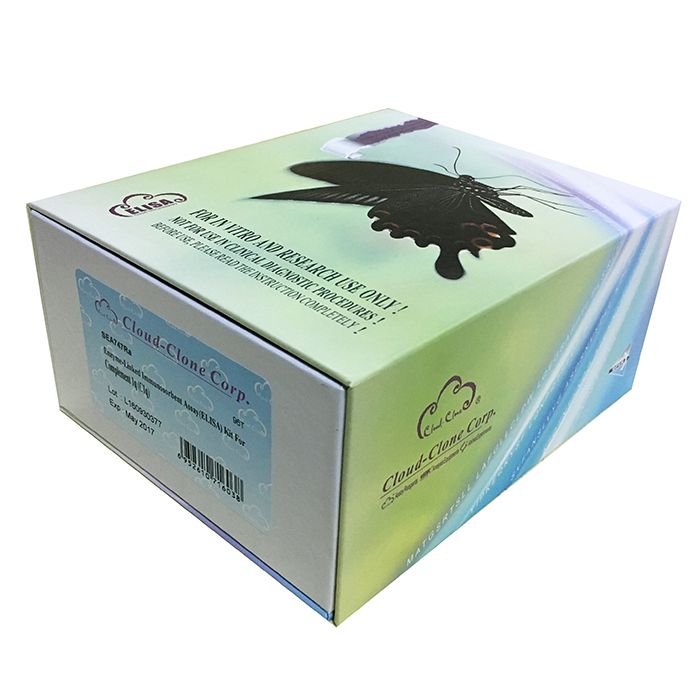
| Product Name | CRP ELISA kit (Mouse) |
|---|---|
| Description | This assay has high sensitivity and excellent specificity for detection of C Reactive Protein (CRP). No significant cross-reactivity or interference between C Reactive Protein (CRP) and analogues was observed. |
| Synonyms | C-RP; PTX1; Pentraxin-Related; Pentraxin 1 |
| Method | Sandwich |
| Detection Range | 0.156-10ng/mL |
| Sensitivity | 0.062ng/mL |
| Target | CRP |
| Specificity | This assay has high sensitivity and excellent specificity for detection of C Reactive Protein (CRP). No significant cross-reactivity or interference between C Reactive Protein (CRP) and analogues was observed. |
| Reactivity | Mouse |
| Sample Types | Serum, Plasma, Tissue Homogenates, Cell Lysates, Cell Culture Supernates And Other Biological Fluids |
| Reconstitution | 1.Prepare all reagents, samples and standards; 2.Add 100uL standard or sample to each well.Incubate 2 hours at 37℃; 3.Aspirate and add 100uL prepared Detection Reagent A.Incubate 1 hour at 37℃; 4.Aspirate and wash 3 times; 5.Add 100uL prepared Detection Reagent B.Incubate 30 minutes at 37℃; 6.Aspirate and wash 5 times; 7.Add 90uL Substrate Solution.Incubate 10-20 minutes at 37℃; 8.Add 50uL Stop Solution.Read at 450nm immediately. |
| Uniprot | P14847 |
| Storage | 4°C for 1 month/ -20°C for long-term(within shelf life) |
| Notes | Colormetric |
| References | Successful Treatment of Acute Lung Injury with Pitavastatin in Septic Mice: Potential Role of Glucocorticoid Receptor Expression in Alveolar Macrophages;Protective Effect of Curcumin on Pulmonary and Cardiovascular Effects Induced by Repeated Exposure to Diesel Exhaust Particles in Mice;Impact of experimental type 1 diabetes mellitus on systemic and coagulation vulnerability in mice acutely exposed to diesel exhaust particles;Short-Term Nose-Only Water-Pipe (Shisha) Smoking Exposure Accelerates Coagulation and Causes Cardiac Inflammation and Oxidative Stress in Mice;Consumption of orange fermented beverage reduces cardiovascular risk factors in healthy mice;Irisin improves endothelial function in obese mice through the AMPK-eNOS pathway;Orange beverage ameliorates high-fat-diet-induced metabolic disorder in mice;Variation of Circulating Inflammatory Mediators in Staphylococcus aureus and Escherichia coli BloodstreamInfection.;Eicosapentaenoic acid-enriched phospholipids improve atherosclerosis by mediating cholesterol metabolism;INTERLEUKIN-1 RECEPTOR 2: A NEW BIOMARKER FOR SEPSIS DIAGNOSIS AND GRAM-NEGATIVE/GRAM-POSITIVE BACTERIAL DIFFERENTIATION;Protective effect of α–lipoic acid against spleen toxicity of dimethylnitrosamine in male mice: Antioxidant and ultrastructure approaches;Grape Seed Procyanidin Extract Reduces Arsenic-Induced Renal Inflammatory Injury in Male Mice.;A ligand-specific blockade of the integrin Mac-1 selectively targets pathologic inflammation while maintaining protective host-defense;Leptin alleviates intestinal mucosal barrier injury and inflammation in obese mice with acute pancreatitis;The Protective Activities of Dietary Sea Cucumber Cerebrosides Against Atherosclerosis Through Regulating Inflammation and Cholesterol Metabolism in Male Mice;Saponins of sea cucumber attenuate atherosclerosis in ApoE−/− mice via lipid-lowering and anti-inflammatory properties;Oxymatrine attenuates lipopolysaccharide-induced acute lung injury by activating the epithelial sodium channel and suppressing the JNK signaling pathway;Eicosapentaenoic acid in the form of phospholipid exerts superior anti-atherosclerosis effects than its triglyceride form in ApoE-/-mice;The potential efficacy of dietary fatty acids and fructose induced inflammation and oxidative stress on the insulin signaling and fat accumulation in mice;Early label-free analysis of mitochondrial redox states by Raman spectroscopy predicts septic outcomes;Baicalin relieves Mycoplasma pneumoniae infection?induced lung injury through regulating microRNA?221 to inhibit the TLR4/NF?¦ B signaling pathway;Pim-2 kinase inhibits inflammation by suppressing the mTORC1 pathway in atherosclerosis; |
| Supplier | Cloud Clone |
PROTOCOLS:
 SEA821Mu
 All Research Products are sold for laboratory RESEARCH USE ONLY and ARE NOT TO BE USED FOR HUMAN OR ANIMAL THERAPEUTIC OR DIAGNOSTIC APPLICATIONS. The information presented is believed to be accurate; however, said information and products are offered without warranty or guarantee since the ultimate conditions of use and the variability of the materials treated are beyond our control. Nothing disclosed herein is to be construed as a recommendation to use our products in violation of any patents. ARP American Research Products, Inc. does not submit its products for regulatory review by any government body or other organization, and we do not validate them for clinical, therapeutic or diagnostic use, or for safety and effectiveness. You are solely responsible for making sure that the way you use the products complies with applicable laws, regulations and governmental policies and for obtaining all necessary approvals, intellectual property rights, licenses and permissions that you may need related to your use. Under no circumstances shall ARP American Research Products, Inc. be liable for damages, whether consequential, compensatory, incidental or special, strict liability or negligence, breach of warranty or any other theory arising out of the use of the products available from ARP American Research Products, Inc. Nothing contained herein warrants that the use of the products will not infringe on the claims of any patents covering the product itself or the use thereof in combination with other products or in the operation of any process. ARP American Research Products, Inc. disclaims any and all representations or warranties of any kind whatsoever, express or implied, including without limitation any implied warranties of merchantability or fitness for a particular purpose, of non-infringement, or regarding results obtained through the use of any product, whether arising from a statute or otherwise in law or from a course of performance, dealing or usage of trade.
