



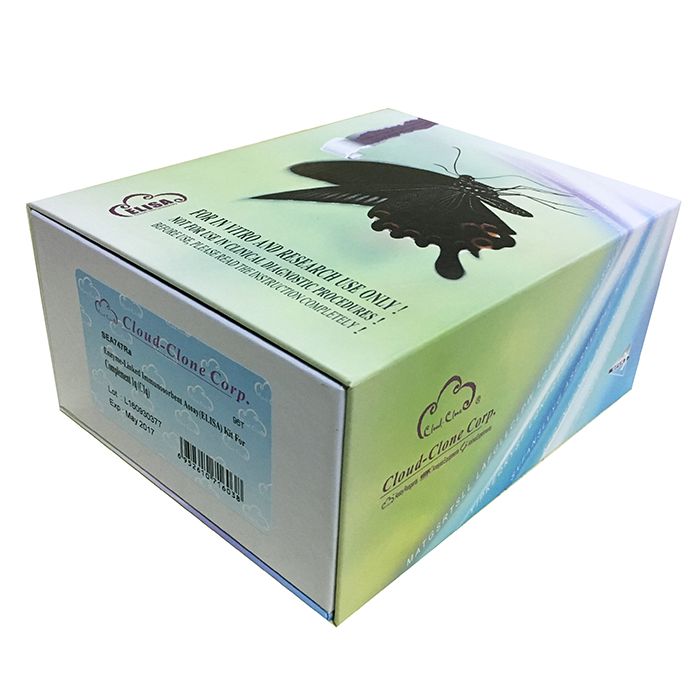
| Product Name | HMGB1 ELISA kit (Human) |
|---|---|
| Description | This assay has high sensitivity and excellent specificity for detection of High Mobility Group Protein 1 (HMG1). No significant cross-reactivity or interference between High Mobility Group Protein 1 (HMG1) and analogues was observed. |
| Synonyms | HMG1; HMG3; SBP1; Sulfoglucuronyl Carbohydrate Binding Protein; Amphoterin; High Mobility Group Box 1 Protein |
| Method | Sandwich |
| Detection Range | 62.5-4,000pg/mL |
| Sensitivity | 28.3pg/mL |
| Target | HMGB1 |
| Specificity | This assay has high sensitivity and excellent specificity for detection of High Mobility Group Protein 1 (HMGB1). No significant cross-reactivity or interference between High Mobility Group Protein 1 (HMGB1) and analogues was observed. |
| Reactivity | Human |
| Sample Types | Serum, Plasma And Other Biological Fluids |
| Reconstitution | 1.Prepare all reagents, samples and standards; 2.Add 100uL standard or sample to each well.Incubate 2 hours at 37℃; 3.Aspirate and add 100uL prepared Detection Reagent A.Incubate 1 hour at 37℃; 4.Aspirate and wash 3 times; 5.Add 100uL prepared Detection Reagent B.Incubate 30 minutes at 37℃; 6.Aspirate and wash 5 times; 7.Add 90uL Substrate Solution.Incubate 10-20 minutes at 37℃; 8.Add 50uL Stop Solution.Read at 450nm immediately. |
| Uniprot | P09429 |
| Storage | 4°C for 1 month/ -20°C for long-term(within shelf life) |
| Notes | Colormetric |
| References | High mobility group box protein-1 (HMGB-1) as a new diagnostic marker in patients with acute appendicitis;Clinical relevance of single nucleotide polymorphisms of the high mobility group box 1 protein gene in patients with major trauma in Southwest China;Is HMGB1 a New Indirect Marker for Revealing Fibrosis in Chronic Hepatitis and a New Therapeutic Target in Treatment?;Diagnostic value of serum concentrations of high-mobility group-box protein 1 and soluble hemoglobin scavenger receptor in brucellosis;High mobility group B1 levels in sepsis and disseminated intravascular coagulation;Elevated serum levels of high mobility group box protein 1 (HMGB1) in patients with ankylosing spondylitis and its association with disease activity and quality of life;IGF-1 alleviates ox-LDL-induced inflammation via reducing HMGB1 release in HAECs ;Decreased Epidermal Growth Factor (EGF) Associated with HMGB1 and Increased Hyperactivity in Children with Autism;ATF3 Protects against LPS-Induced Inflammation in Mice via Inhibiting HMGB1 Expression;Correlation between serum high-mobility group box-1 levels and high-sensitivity C-reactive protein and troponin I in patients with coronary artery disease;Serum levels of high mobility group box 1 protein and its association with quality of life and psychological and functional status in patients with fibromyalgia;Soluble receptor for advanced glycation end-products and progression of airway disease;Effects of Single or Combined Treatments with Radiation and Chemotherapy on Survival and Danger Signals Expression in Glioblastoma Cell Lines;High plasma levels of high mobility group box 1 is associated with the risk of sepsis in severe blunt chest trauma patients: a prospective cohort study;The Alarmin Concept Applied to Human Renal Transplantation: Evidence for a Differential Implication of HMGB1 and IL-33;Plasma levels of high mobility group box 1 increase in patients with posttraumatic stress disorder after severe blunt chest trauma: a prospective cohort study;High-mobility group box-1, promising serological biomarker for the distinction of human WNV disease severity;Increased VEGF and Decreased SDF-1α in Patients with Silent Brain Infarction Are Associated with Better Prognosis after First-Ever Acute Lacunar Stroke ;Wogonin Inhibits Tumor-derived Regulatory Molecules by Suppressing STAT3 Signaling to Promote Tumor Immunity;Plasma HMGB-1 Levels in Subjects with Obesity and Type 2 Diabetes: A Cross-Sectional Study in China;High mobility group box 1 gene polymorphism is associated with the risk of postoperative atrial fibrillation after coronary artery bypass surgery;Overexpression of HMGB1 A-box reduced lipopolysaccharide-induced intestinal inflammation via HMGB1/TLR4 signaling in vitro;Low Shear Stress Induced HMGB1 Translocation and Release via PECAM-1/PARP-1 Pathway to Induce Inflammation Response;Serum levels of HMGB1 have a diagnostic role in metastatic renal cell cancer;High mobility group box1 protein is involved in acute inflammation induced by Clostridium difficile toxin A.;COMPOSITIONS AND METHODS FOR INHIBITING HMGB1 ACTIVATION OF MELANOCYTES;METHOD OF MAKING A SKIN CARE COMPOSITION;Relevance of pre-analytical blood management on the emerging cardiovascular protein biomarkers TWEAK and HMGB1 and on miRNA serum and plasma profiling.;Serum HMGB1 as a Potential Biomarker for Patients with Asbestos-Related Diseases.;Changes in pro-inflammatory markers and leucine concentrations in response to Nordic Walking training combined with vitamin D supplementation in elderly women.;Serum HMGB1 serves as a novel laboratory indicator reflecting disease activity and;HMGB1 blockade differentially impacts pulmonary inflammation and defense responses in poly (I: C)/LPS-exposed heart transplant mice;The role of high mobility group box 1 protein in interleukin-18-induced myofibroblastic transition of valvular interstitial cells;Urinary MCP-1、HMGB1 increased in calcium nephrolithiasis patients and the influence ofhypercalciuria on the production of the two cytokines.;Diagnostic Value of High-Mobility Group Box 1 (HMGB1) Protein in Acute and Perforated Appendicitis.;High Mobility Group Box 1 Mediates Interferon-r-Induced Phenotypic Modulation of Vascular Smooth Muscle Cells.;Glycyrrhizin ameliorates experimental colitis through attenuating interleukin-17-producing T cell responses via regulating antigen-presenting cells.;SIRT1 inhibits releases of HMGB1 and HSP70 from human umbilical vein endothelial cells caused by IL-6 and the serum from a preeclampsia patient and protects the cells from death.;The expression of HMGB1 and the receptor for advanced glycation end products (RAGE) in epithelial ovarian cancer;SIRT1 inhibits releases of HMGB1 and HSP70 from human umbilical vein endothelial cells caused by IL-6 and the serum from a preeclampsia patient and protects the cells from death;Induction of Immunogenic Cell Death in Lymphoma Cells by Wharton’s Jelly Mesenchymal Stem Cell Conditioned Medium;Oxidized low-density lipoprotein promotes osteoclast differentiation from CD68 positive mononuclear cells by regulating HMGB1 release;Correlation between high mobility group box 1 protein, tumor necrosis factor-α, and acute coronary syndrome;PERK induces resistance to cell death elicited by endoplasmic reticulum stress and chemotherapy;Assessing the recovery from prerenal and renal acute kidney injury after treatment with single herbal medicine via activity of the biomarkers HMGB1, NGAL and KIM-1 in kidney proximal tubular cells treated by cisplatin with different doses and exposure times.;Blocking the Feedback Loop between Neuroendocrine Differentiation and Macrophages Improves the Therapeutic Effects of Enzalutamide (MDV3100) on Prostate Cancer.;Secreted tryptophanyl-tRNA synthetase as a primary defence system against infection.;Bromodomain inhibition exerts its therapeutic potential in malignant pleural mesothelioma by promoting immunogenic cell death and changing the tumor immune …;Tumor lysate-based vaccines: on the road to immunotherapy for gallbladder cancer;Oridonin enhances the cytotoxicity of 5-FU in renal carcinoma cells by inducting necroptotic death;Thrombomodulin, alarmin signaling, and copeptin: cross-talk between obesity and acute ischemic stroke initiation and severity in Egyptians;Increased serum levels of high mobility group protein B1 and calprotectin in pre‐eclampsia;Molecules of Damage-Associated Patterns in Bronchoalveolar Lavage Fluid and Serum in Chronic Obstructive Pulmonary Disease;HMGB1-RAGE signaling pathway in pPROM;Chronic obstructive pulmonary disease (COPD)--from biomarkers to clinical phenotypes;iris-AperTO;Dulaglutide mitigates inflammatory response in fibroblast-like synoviocytes;BET bromodomain inhibitor JQ1 promotes immunogenic cell death in tongue squamous cell carcinoma;High mobility group box protein 1 neutralization therapy in ovine bacteremia: Lessons learned from an ovine septic shock model incorporating intensive care support;Evaluation of the Effect Derived from Silybin with Vitamin D and Vitamin E Administration on Clinical, Metabolic, Endothelial Dysfunction, Oxidative Stress Parameters …;HMGB1 Mediates Paraquat-Induced Neuroinflammatory Responses via Activating RAGE Signaling Pathway;Damage-Associated Molecular Patterns and Th-Cell-Related Cytokines Released after Progressive Effort;Dendritic Cells Loaded with Heat Shock-Conditioned Ovarian Epithelial Carcinoma Cell Lysates Elicit T Cell-Dependent Antitumor Immune Responses In Vitro;A novel diagnostic tool for the detection of bladder cancer: Measurement of urinary high mobility group box-1;Marathon Run-induced Changes in the Erythropoietin-Erythroferrone-Hepcidin Axis are Iron Dependent;Glycyrrhizin Prevents Hemorrhagic Transformation and Improves Neurological Outcome in Ischemic Stroke with Delayed Thrombolysis Through Targeting …;Hypoxic Wharton's Jelly Stem Cell Conditioned Medium Induces Immunogenic Cell Death in Lymphoma Cells;Aberrant Expression of High Mobility Group Box Protein 1 in the Idiopathic Inflammatory Myopathies;Naja sumatrana venom cytotoxin, sumaCTX exhibits concentration-dependent cytotoxicity via caspase-activated mitochondrial-mediated apoptosis without …;DAMPs released by pyroptotic cells as major contributors and therapeutic targets for CAR-T-related toxicities;Insights into P-Glycoprotein Inhibitors: New Inducers of Immunogenic Cell Death;Autophagy-associated HMGB-1 as a novel potential circulating non-invasive diagnostic marker for detection of Urothelial Carcinoma of Bladder;Clinical significance of high mobility group box 1/toll-like receptor 4 in obese diabetic patients;Intracellular translocation of HMGB1 is important for Zika virus replication in Huh7 cells;High Mobility Group Box-1 Protein and Interleukin 33 Expression in Allergic Rhinitis;SKP2 drives the sensitivity to neddylation inhibitors and cisplatin in malignant pleural mesothelioma;Abnormal intestinal milieu in post-traumatic stress disorder is not impacted by treatment that improves symptoms;The antiviral action of resveratrol against Zika virus through the regulation of interferon responses by HMGB1; |
| Supplier | Cloud Clone |
PROTOCOLS:
 SEA399Hu
 All Research Products are sold for laboratory RESEARCH USE ONLY and ARE NOT TO BE USED FOR HUMAN OR ANIMAL THERAPEUTIC OR DIAGNOSTIC APPLICATIONS. The information presented is believed to be accurate; however, said information and products are offered without warranty or guarantee since the ultimate conditions of use and the variability of the materials treated are beyond our control. Nothing disclosed herein is to be construed as a recommendation to use our products in violation of any patents. ARP American Research Products, Inc. does not submit its products for regulatory review by any government body or other organization, and we do not validate them for clinical, therapeutic or diagnostic use, or for safety and effectiveness. You are solely responsible for making sure that the way you use the products complies with applicable laws, regulations and governmental policies and for obtaining all necessary approvals, intellectual property rights, licenses and permissions that you may need related to your use. Under no circumstances shall ARP American Research Products, Inc. be liable for damages, whether consequential, compensatory, incidental or special, strict liability or negligence, breach of warranty or any other theory arising out of the use of the products available from ARP American Research Products, Inc. Nothing contained herein warrants that the use of the products will not infringe on the claims of any patents covering the product itself or the use thereof in combination with other products or in the operation of any process. ARP American Research Products, Inc. disclaims any and all representations or warranties of any kind whatsoever, express or implied, including without limitation any implied warranties of merchantability or fitness for a particular purpose, of non-infringement, or regarding results obtained through the use of any product, whether arising from a statute or otherwise in law or from a course of performance, dealing or usage of trade.
